


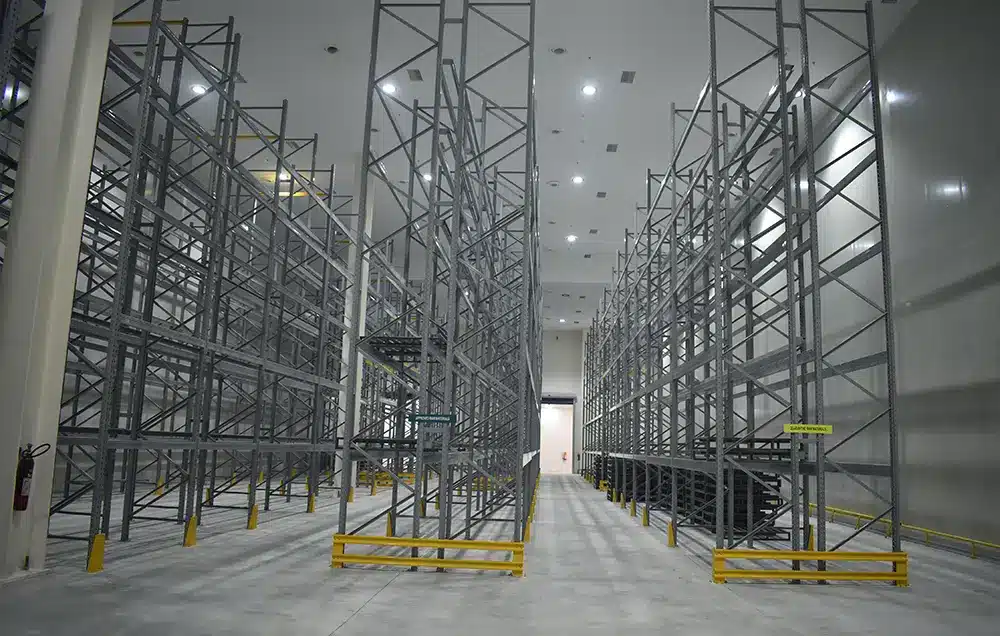
Every warehouse ends up facing the same problem eventually. Stock keeps growing; the floor space doesn’t. That’s usually when the search for a storage rack manufacturer starts, and honestly, it doesn’t take long before it gets confusing. Nearly everyone in the market calls themselves a “heavy duty” or “customized” solutions provider. Fewer of them can actually prove it with real engineering and infrastructure behind the claim. This piece works through the three questions that come up again and again when businesses start shortlisting a rack manufacturer.
Top Material Storage Racks Manufacturers for Industries
A single certificate is not enough to tell you whether a manufacturer is good or bad. But the leading ones whom you can trust have a few common things in common that u must check before finalizing. The manufacturer must have been in the industry for a while, manufacturing in-house rather than outsourcing fabrication, and have the experience of working along with more than one industry.
Metal Storage Systems Pvt. Ltd., known as METSTO, is based out of Bengaluru and has been in the racking business for close to two decades now. Their facility runs across more than 2,50,000 sq. ft. and uses European shearing and forming machinery, and the company holds ISO 9001:2015 certification. Over the years they’ve expanded into 17-plus cities including Chennai, Coimbatore, Hyderabad, Pune, Delhi, Ahmedabad, and Goa. Their client list includes names like Coca-Cola, Bosch, Kia, L&T, Schneider, and many more, which says something about the scale they operate at.
What actually separates a manufacturer like this from a smaller local fabricator is how wide the product range goes. It’s not just pallet racks. They also make mezzanine floors, multi-tier racking, mobile compactors, drive-in racks, cantilever racks, FIFO racks, die storage racks, and automated systems like storage towers and mini-load silos. And that range matters more than it might seem at first, because no two industries store things the same way. A food and beverage warehouse doesn’t need what an electronics facility needs, and neither of them looks anything like an automobile spares unit.
A manufacturer that’s genuinely built for industry work should also be able to speak specifically about sectors like pharmaceuticals, tyre storage, aviation components, garments, government warehousing, and heavy equipment manufacturing, since each of these comes with its own load, accessibility, and safety requirements. If a vendor gives you a generic answer when you ask how their racks hold up in your specific industry, that’s usually worth noticing.
How to Select the Best Heavy Duty Rack Manufacturers?
Picking a heavy duty rack manufacturer purely on price is how people end up with racks that sag under load or rust out within a year and then pay twice for the same job. Here’s what’s actually worth checking before you sign anything.
· Look past the catalogue and into the factory. Find out if the racks are made in-house or bought in as parts and assembled. Manufacturers who shear and form their own steel coils, instead of working with pre-cut sections, generally end up with joint-free verticals and horizontals. That difference shows up in load stability years down the line, not on day one.
- Ask about certification. ISO 9001:2015 isn’t a guarantee of perfection, but it’s a reasonable sign that the manufacturer has consistent quality checks in place, from where they source raw material to how they inspect the finished product.
- Get load capacity numbers in writing. Any manufacturer worth working with should be able to give you clear and transparent load ratings, per shelf and per bay. If all you’re getting is “don’t worry, it can handle it,” think twice.
- Pay attention to how they handle the site visit. A rack system that actually works is designed around your floor layout, ceiling height, and the equipment you use to move goods around, not the other way around. Manufacturers who skip this step and go straight to quoting a standard configuration are more likely to hand you something that doesn’t quite fit.
- Check where they’ve worked before, and where they operate from. A manufacturer that’s already solved storage problems for heavy equipment, tyre, or elevator companies has probably run into edge cases a newer or narrower player hasn’t. And having branches across several cities usually means faster support once the racks are up and running, rather than waiting weeks for someone to show up.
Which Heavy Duty Rack Manufacturers Provide Customized Solutions?
Not every warehouse fits a standard template, and manufacturers who only offer fixed sizes end up forcing businesses to compromise on space that they’re paying good money for. The ones worth considering have an actual customization process built into how they work, rather than treating it as a favor when a client insists.
Usually that process moves through three stages. First, requirement analysis: understanding the payload, the dimensions of what’s being stored, how much ground and vertical space is available, and how often items get picked or moved. Then custom engineering, where the bay widths, beam levels, and upright thickness get designed around those specific numbers instead of being tweaked from an off-the-shelf model. Development follows after that, once the design is locked in.
Manufacturers who take customization seriously tend to extend it into specialized products too, things like die storage racks for manufacturing units, cantilever racks for
long or oddly shaped goods, ESD-safe shelving for electronics, and mobile pallet racking for facilities where floor space is tight. Companies like Metal Storage Systems have built this into their standard offering rather than bolting it on as an afterthought, which is usually why the turnaround is faster than expected.
Before you take a manufacturer’s word for it on customization, ask for real examples. Heavy equipment, tyre storage, and elevator component storage are good sectors to ask about, since none of them work well with off-the-shelf rack sizes. If a manufacturer can walk you through an actual project where they solved a non-standard storage problem, that tells you more than any brochure will.
FAQs:
Q1. What is the difference between a pallet rack and a heavy duty rack?
Pallet racks are built to store palletized goods and can handle moderate to high loads. Heavy duty racks use thicker steel and reinforced uprights to carry much heavier weights, which is why they’re the go-to choice in industries like heavy equipment, automobile, and tyre manufacturing, where individual items are bulky and heavy on their own.
Q2. How long does it take to get a customized racking system installed?
It depends on how complex the design is and how large the order is, but the general flow goes through site assessment, engineering, fabrication, and installation. Manufacturers who handle production in-house, with an established engineering process, tend to turn things around faster than those depending on outside fabricators.
Q3. Do storage rack manufacturers offer maintenance and inspection support after installation?
Most reliable manufacturers do offer periodic inspection to check for wear, load compliance, and general structural safety, particularly for heavy duty and mobile systems that see constant daily use. It’s still worth confirming this is part of your purchase agreement rather than assuming it comes included.
